
Miracles for the Tough-Minded
Atheists, agnostics, and non-Catholics: the gauntlet has been thrown down

I am not, by nature, a credulous person.
It is therefore unsurprising that miracle stories have never been an important part of my faith. Indeed, the opposite is closer to the truth. When someone claims to have witnessed a miracle, my default response is disbelief.1 I mean… really? Did that actually happen? Did it happen completely in the way you’ve described it? Isn’t it possible—nay, more likely—you were confused or deceived? Were you simply, though perhaps piously, seeing what you wanted to see? Did you see it yourself, or are you merely reporting a story you heard second or thirdhand? And so on.
In fact, there were many years during which, even as a practicing Christian, I struggled deeply with doubts about the truth of Christianity, and stories about miracles were much more likely to lead me to further doubts, new questions, and eye rolls than to a deeper faith. So I mostly just ignored ‘em.
When I became interested in Roman Catholic Christianity and began to explore the Church’s claims about herself, I remained disinterested in the miraculous. It never even occurred to me that miracle claims might be relevant to the intellectual journey I was on. My eventual embrace of Catholicism was based on considerations that were more purely biblical, theological, and historical. During the course of that journey, however, I began to notice that Catholics seemed to talk a bit more, and with greater confidence, about miracles than the non-Pentecostal Evangelicals with whom I had long identified. There were several miracles in particular that kept cropping up. I thought it was weird—and as I look back on it in hindsight, I daresay it is weird, and not merely weird but actually very very weird—that I had never even heard of these events. I’d been a faithful churchgoer, a regular Bible study participant, a consumer of Christian media, and had even earned a master’s degree at a Protestant seminary, yet somehow these extraordinary events were completely foreign to me… extraordinary events that are extremely well-known and well-publicized within the Catholic world. It’s truly bizarre.
If you’re a faithful Roman Catholic, I bet you know exactly what the following terms refer to:
Our Lady of Guadalupe
The Miracle of the Sun
The stigmata
Lourdes
Eucharistic miracles
…and if you are a faithful American Evangelical, then unless you’ve chosen for some reason to immerse yourself in the online Catholic world, I bet you’ve never even heard of them.2
Similar things can be said about the dynamics within the world of academic philosophy. [Aside for new readers: I earned a Ph.D. in philosophy at The Ohio State University, and was a tenured professor of philosophy at a secular university before becoming an administrator and moving into the world of Catholic education.] In my formal study of philosophy in general and the philosophy of religion in particular, I encountered surprisingly little discussion of the miraculous per se. There was a lot of talk about “religious experiences” and whether and to what degree and for whom such experiences make belief in God rational, and quite a lot of talk about David Hume’s well-known argument that it can never be reasonable to believe that a miracle has occurred, but I had earned multiple degrees in philosophy and was being paid to teach it for years before I ever heard of Fatima or Juan Diego’s tilma or the stigmata or any of these things that are, I suspect, quite familiar to the average twelve-year-old in a moderately observant Catholic family. Again: it’s weird.
All of this is on my mind because I spent quite a bit of time in the car last week, and I devoted a big chunk of that time to listening to one of the most remarkable podcast conversations I have ever heard. It’s not perfect—there are relatively minor bits and pieces I’d quibble with—but holy smokes. This is amazing:
The only real problem with it is that it’s FIVE HOURS LONG, and they even say so in the title. The inevitable consequence is that lots of people who would benefit from listening to this conversation will never click the link. I probably wouldn’t have done so myself, had not the Substack algorithms kept pointing me towards it right around the time I was getting ready for a family vacation. I am extremely glad I did. (My wife is too, by the way, as are the teenagers who were in the car with us. All of us were fascinated.) Therefore, I thought it would be prudent to share a very quick summary and add a few thoughts of my own for anyone who might be interested. So here you go.
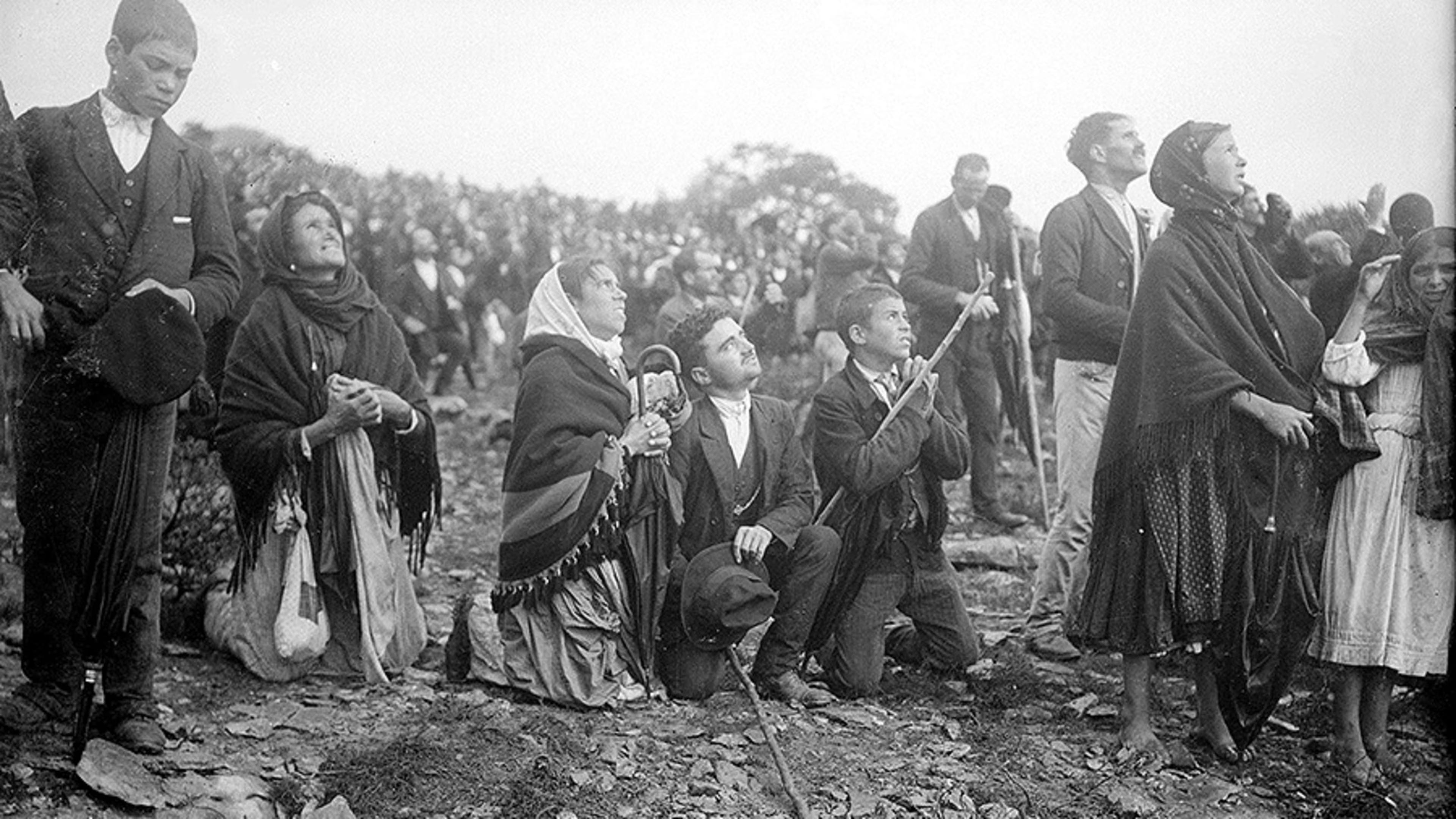
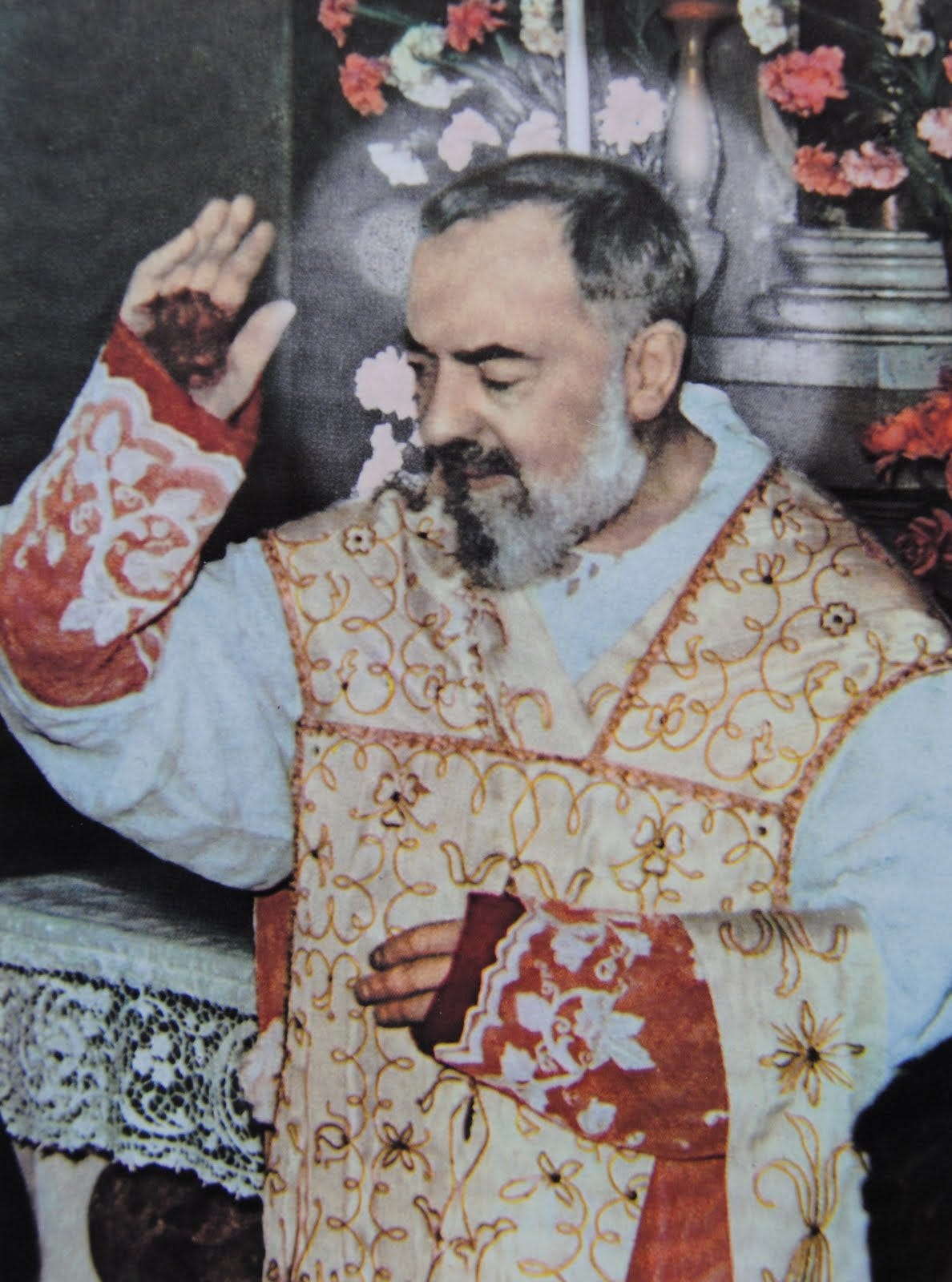
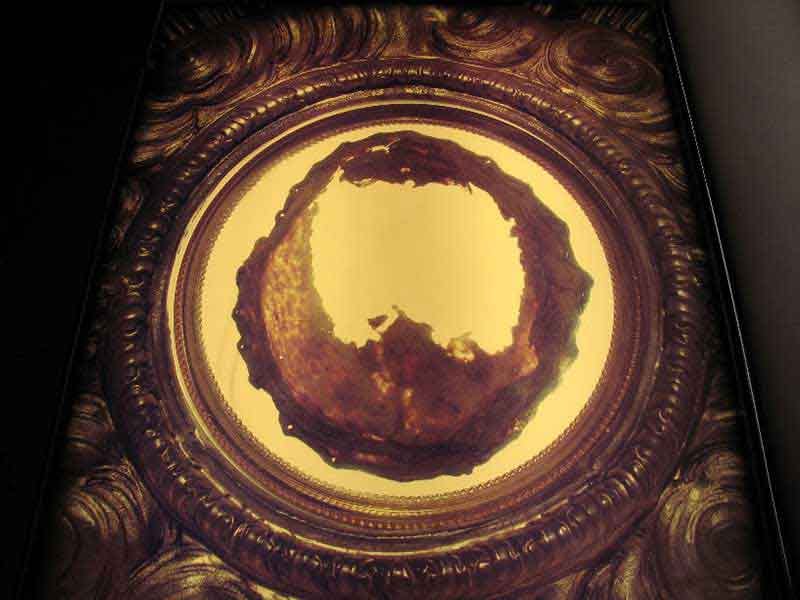
The link above will take you to a conversation between Matt Fradd, host of the Pints with Aquinas podcast, and Ethan Muse, an atheist-turned-Protestant-turned-Catholic Christian who has done some really impressive research on purportedly miraculous events. They do a deep dive into three specific topics: the Miracle of the Sun, when, in 1917, tens of thousands of people in Fatima, Portugal, witnessed… well, something that they took to be a sign from God that had been prophesied by three shepherd children; the stigmata of Saint Padre Pio, who bore wounds like those of Jesus Christ for fifty years, from 1918 to 1968; and the Eucharistic miracle of Lanciano, where bread and wine employed in the celebration of the Mass turned into human flesh and blood back in the eighth century and remain on display today. Each of these purported miracles is supported by evidence that is overwhelming in both quantity and quality. That’s an extremely bold claim, I realize, but I don’t know how else to say it. The evidence is really, really good. If you want the details, listen to (or better yet, watch) the podcast.
The Refutation of Atheism (and Agnosticism)
For present purposes, I want to make and emphasize a different extremely bold claim, namely: given the mere availability of this evidence—and if you are reading this essay, you have access to the evidence—it cannot reasonably be maintained that we live in a materialistic universe. That is, the laws of physics and chemistry are insufficient to explain everything that happens. There are lots of other reasons to reject materialism as a worldview, of course, but the evidence for the miracles listed above should end the debate for anyone who encounters it. No, really. It’s that good. Metaphysical materialism is done. Over. Kaput. Finished. Enlightenment atheism can safely be put to bed. You guys had a good run, but it’s over.
Now, a philosophically informed skeptic will probably want to raise an objection here. Specifically, he or she will interject that even granting for the sake of argument that there is overwhelmingly good reason to reject metaphysical materialism, that doesn’t mean theism must be true. And this is correct. Although atheism in our day usually does go hand-in-hand with the belief that all reality is merely physical,3 it is possible to be an atheist—that is, to disbelieve in God—while also maintaining that there are casually efficacious immaterial realities: i.e., that “spiritual forces” of some kind are just as fundamental or even more foundational features of the world than are material things. Perhaps, for example, we live in a universe where consciousness is both immaterial and also part of the warp and woof of everything that exists, mysteriously attaching itself to or being focused by complex organic structures; perhaps sometimes manifesting itself in ways that we interpret as angelic or ghostly or demonic; and perhaps there is no deeper explanation to be given for why this is the case; maybe that’s just how things are. Couldn’t the atheist embrace all the evidence surveyed by Ethan Muse in the podcast but deny Muse’s interpretation of that evidence? That is, couldn’t the atheist bite the bullet and agree that “miracles,” in some sense, really do occur, but that they are merely anomalous events without any religious significance?
Well, in one sense, I suppose, the answer is “yes.” The atheist can affirm or deny whatever he or she pleases. It’s a free country, after all. And it’s hard to see how there would be anything logically contradictory about believing both that atheism is true and that Padre Pio received the stigmata. Then again, it is hard to see how there would be anything logically contradictory about believing both that the earth is flat and that there are people who have sailed around the world. Strictly speaking, there’s no contradiction there, but it’s a pretty awkward conjunction of beliefs. Likewise for trying to hold on to atheism and accept the evidence we have for the miracles above. When we attend to the particular contexts in which these miracles occurred, it strains credulity to interpret them as something other than confirmation of the Christian message.4 The evidence presented by Muse gives us extremely strong reason to believe that God exists.
There’s another kind of challenge lurking in these waters, however, and it’s tough for me to articulate because it isn’t really a philosophical problem at all. It’s a psychological one. I’m thinking of the atheist (or agnostic) who responds to the bold claims above with something like the following:
“Meh. None of this moves me. A bunch of Portuguese people had a weird experience a century ago. Some monk had inexplicable holes in his hands. There appears to be human flesh in a jar in Italy. So what? I have a friend whose child died of cancer. The parents prayed, and God did nothing. I’ve been to church a million times and have never seen anything remotely mysterious going on. I certainly haven’t been overwhelmed by the presence of the divine or anything like that. If God wants me to care about this stuff, he needs to do something that matters to me, in my life. Until then, I don’t particularly care how impressed you are, or how impressed you think I should be, by all of this ‘evidence.’”
And then the person crosses her arms in an emphatic gesture, or drops a microphone dramatically, or maybe just sticks out her tongue and walks away.
I don’t want to be dismissive, but I do want to highlight that there are two big problems with a response like this. The first is that it’s what they call a red herring, a distraction from the real issue, a way of changing the subject. If you’re an atheist on the grounds that God hasn’t done anything that gives us reason to believe he is at work in the world, and then someone says, “You’re mistaken! Look! Here’s some really excellent evidence that demonstrates that God is at work in the world!”, it’s a pretty cheap response to come back with, “I don’t want God to do that stuff, though; I want God to do a different thing!” If you’re going to hold on to your atheism in spite of the claims being made here, you’re now going to have to admit that it’s not because there’s no evidence for theism; it’s because you didn’t care enough to look into the evidence. And that, dear reader, is what they call a you problem.
The other thing I want to point out here may also aptly be described as a you problem. The response imagined above presumes an attitude wholly incompatible with the proper stance of a creature toward its Creator. I recognize that this flies directly in the face of some of our most deeply-held sensibilities as twenty-first century Westerners, but so much the worse for twenty-first century Westernism. We do not set the terms for the divine. It is not for us to stipulate under what circumstances we will acknowledge that God is God and we are not, to demand that God condescend to our preferences (though orthodox Christian theology emphasizes, shockingly, that God sometimes chooses to do that very thing: as C. S. Lewis has said, “God is very unscrupulous”). We come to God—or should come to God—in a posture of receptivity, willing to accept his terms, not insisting on imposing our own. Fiat voluntas Tua — Thy will be done.
One more point before I move on. A more generous interpretation of my imagined interlocutor’s intentions would go as follows: “It’s not that I’m unwilling to believe; it’s that none of the stuff described in the podcast really engages me. If God would do something genuinely dramatic in my life, then I would believe.” And to that response, it is fair to ask: Would you? What reason is there to think that you’d react differently to [fill in the blank with whatever dramatic miracle you choose] than you have reacted to the evidence you’ve already encountered? Wouldn’t you simply conclude that you had been tricked, or you were confused, or that there’s something going on that you just don’t understand? If evidence of the kind presented by Ethan Muse doesn’t persuade you, what on earth makes you think that something different actually would?
I hope that doesn’t sound excessively preachy or judgmental — insofar as it is preachy, I’m preaching first into the mirror; insofar as it’s judgmental, I am judging my own heart way before anyone else’s. Years ago, I read a line in Dallas Willard’s terrific book Hearing God that has stuck with me ever since: “The question must be asked,” Willard writes, noting that those of us who lament not hearing more, or hearing more clearly, from God must examine our own motives for wanting to do so: “‘To what use would I try to put a word from God?’” In other words, if my reasons for wanting to hear more clearly from God are something other than a desire to love him and love others better, why would I expect to receive such a word? And in the present context, I am challenging the atheist reader simply to engage in the same kind of self-reflection. “Know thyself,” and all that. If Muse’s evidence doesn’t persuade you, then again I ask: why do you think different evidence would?
The Refutation of Everything Else That Isn’t Catholic
But enough badgering of atheists and agnostics. I also want to address my friends and readers who are non-Catholic Christians. It seems to me—and I’m going to risk saying this very bluntly—that the evidence for the Miracle of the Sun, Padre Pio’s stigmata, and the Eucharistic miracle of Lanciano (not to mention the Our Lady of Guadalupe tilma, the healings at Lourdes, other Eucharistic miracles, and about a bajillion additional miracle claims that have been vetted by the Vatican) puts you in a very awkward position. Just as Christians of all stripes agree that the central miracle of our faith—the Resurrection of Jesus Christ—is the divine affirmation par excellence, God’s endorsement of the person and teaching of Our Lord, so, it seems, these miracles are a divine endorsement of the Catholic faith.
You’re in an especially awkward position if you find yourself where I was fifteen years ago, and where many Protestants clearly are today: believing that Roman Catholicism is a legitimate expression of the Christian faith. It’s one thing to say that Catholicism is a pernicious lie straight from the pit of hell; if you go that route, then maybe you can dismiss all this stuff as a diabolical deception. More on that possibility below. But if you’re not willing to say that—if you concede, however grudgingly, that Pope Leo and me and a billion or so others who sincerely believe that Jesus Christ died for our sins and rose again from the dead and are seeking, however imperfectly, to live lives that please and honor him, are therefore genuine Christians ourselves—then what the heck do you do with these miracles? If you would point to the Resurrection as the reason we can know that Christianity is the fullest, most complete self-revelation of God to humanity, why would you not apply the same logic here? Why would you not conclude from these miracles that Catholicism is the fullest, most complete expression of Christianity? As Muse points out in the podcast, one very striking thing about these miracles in particular is that they are inextricably linked to distinctively Catholic doctrines: a high Mariology, the Real Presence, the redemptive value of suffering, and so on. It sure appears that in these miracles God has given us signs not merely that he exists, and not merely that he is at work in the world, but that he is at work in the Catholic Church in a unique and distinctive way.
I see no option for the non-Catholic Christian here other than to embrace Catholicism or ascribe these miracles to demonic forces; to say, as some will say, that the great Deceiver himself has been permitted to perform extraordinary signs and wonders in order to lead many astray. But that’s just not going to work as an explanation for distinctively Catholic miracles. Say what you will about the issues that divided the European church in the sixteenth century, lament the nuances and complexities of Catholic theology, raise whatever questions and objections you find most compelling, but consider the Apostle Paul’s instructions to the Corinthians, precisely in the context of discerning an authentic work of God from practices that could lead the Corinthians “astray to mute idols”: “No one can say ‘Jesus is Lord’,” Paul writes, “except by the Holy Spirit” (1 Corinthians 12). And then come to a Catholic Mass sometime. Just sit quietly in the back and watch. No one will mind. Come any day of the week. Watch, listen, and ask: Is this a place where Jesus is worshipped? Do these people sincerely say “Jesus is Lord”?
Spoiler alert: you’re going to discover that it is, and that they do. But then… what do you do about these miracles?
My claim here is that the non-Catholic Christian who is aware of the evidence presented by Muse now faces something of a dilemma. The following two propositions are true:
(1) Believing Catholics, as such, are members of the universal Christian church.
(2) God has confirmed the truth of distinctively Catholic doctrines through miraculous works.
But the non-Catholic also needs to affirm this:
(3) It is legitimate to remain outside the Catholic Church.
This is not a stable position. To return to a point I made above, the non-Catholic Christian is in a situation analogous to a non-Christian who believes that the evidence for the Resurrection of Jesus is compelling and that the Resurrection is a sign that God was and is at work through Jesus in a unique way, and who nonetheless decides not to become a Christian of any sort. This would be both irrational and spiritually harmful. I submit that the same thing is true of the Christian who wants to hold on to all three of the numbered propositions above. You’ve got to let at least one of them go. You shouldn’t give up on (1), because Catholics pass the test proposed by the Apostle Paul in 1 Corinthians 12: “No one can say ‘Jesus is Lord’ except by the Holy Spirit.” [Aside: If this isn’t sufficient to persuade you, let me note that I’ve written a whole essay on how I myself moved from rejecting proposition (1) to embracing it. You can read it here.] You shouldn’t give up on (2), because we have extraordinarily strong evidence in support of it. [Again: find some time over the next few days to watch the Pints with Aquinas episode linked to above.] And, well, you know where this is going. You should give up proposition (3). You should become Catholic.
Epilogue on Christian Unity
Before closing, let me say a word about why this stuff—the immediately preceding section aimed at my fellow Christians, I mean—is important to me. It’s not primarily because I believe that all of us should pursue the truth, though I certainly do believe that. It’s not remotely out of a desire to win a debate or somehow prove that I’m right or smart or anything like that. God help me, I hope that’s not what motivates all of this. No: this stuff matters to me because I have become more and more convinced that unity among Christians is deeply, extraordinarily important, and I have also come to believe, for reasons I won’t try to articulate here, that it is actually possible. I pray more or less daily for the re-unification of the Church established by Jesus Christ: that his high priestly prayer in John 17 would be answered, that our generation would witness the healing of the wounds St. Paul laments in 1 Corinthians 1. I’m not a terribly emotional person when it comes to my experiences in prayer, but I can say in all sincerity that my hearts breaks when I bring this before God. I long to see Christians united—deeply, authentically; not merely getting along, but knit together as we ought to be—as a witness to God’s love for the Church and his love for the world. My prayer is that we would be united under the Holy Father through the Eucharist, that all Christians would experience the life and strength and joy found through the sacraments, that we would be one, even as Christ and the Father are one.
Christian friends, there is one and only one mechanism whereby unity of that sort can be achieved, and, with all due respect, it’s not the Protestant approach of striving to read our Bibles ever more closely [follow the link below for more of my thoughts on that topic], though the characteristic Protestant emphasis on and love for Sacred Scripture is an example for Catholics to emulate.

Nor will unity be achieved through Eastern Orthodoxy, though there is much to embrace and for Catholics to learn (or re-learn) from that branch of our family tree. And it’s not going to come from the ever-fragmenting Anglican communion either, in spite of all the good that church has done in seeking to find middle ground between the different expressions of our shared faith. Real Christian reunion—and I will be so bold as to say that I believe this is something God himself longs for—will come only through a recognition of the authority of the Bishop of Rome and the bishops in communion with him: an authority granted by Jesus Christ to his apostles and handed on, generation to generation, ever since. It will come through shared participation in the “one bread” St. Paul speaks of in 1 Corinthians 10.
We know from Scripture that God desires his people to be one, to be united. I submit that we know from the Miracle of the Sun, the stigmata of St. Padre Pio, and the Eucharistic miracle of Lanciano that God desires his people to be one under the headship of the Holy Father and through the sacramental life of the Church: above all, through the Eucharist, the source and summit of our faith.
Listen to the podcast and let me know what you think.
I write these essays because I care about these topics and enjoy doing it. I’m fortunate to have a good job that doesn’t (usually) make me wish I could quit and be a full-time writer instead. I don’t have any plans to offer a paid subscription option for Less of a Theory. But hey, if you benefited from this and want to
I wouldn’t object. Thanks for reading!
I should clarify that by miracle I mean something truly extraordinary, an event for which there is no remotely plausible explanation within the ordinary course of events, a phenomenon that genuinely requires a supernatural explanation, etc.; not merely an improbable occurrence or an answered prayer.
And if you have heard of them, hey: that’s great! No shade, baby.
Or, more precisely, the belief that all reality is ultimately reducible to or supervenes upon the physical.
Another nod to my philosophically sophisticated readers: I know I haven’t really defended this claim. But give me a break: this isn’t Faith & Philosophy here. And there’s at least some discussion of this issue included in the podcast, so listen to that and then get back to me.